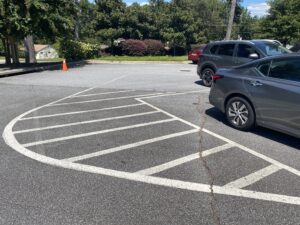
When walking or driving through a parking lot, you’ll often notice areas with diagonal or cross-hatched lines painted on the pavement. These hash marked areas serve an important purpose: they signal zones where parking is not allowed. While they may look like unused space, these markings are essential for safety, accessibility, and efficient traffic flow.
Why Hash Marked Areas Exist
-
Accessibility – In compliance with the Americans with Disabilities Act (ADA), hash marked spaces are often placed next to accessible parking spots. They create room for wheelchair ramps, mobility devices, and vehicle lifts, ensuring people with disabilities can safely enter and exit their vehicles.
-
Emergency Access – Some hash marked areas are designed to keep fire lanes, hydrants, or emergency routes clear. These spaces allow first responders access when seconds matter.
-
Traffic Flow & Visibility – Hash marks help keep intersections, corners, and drive aisles open, preventing congestion and accidents. They provide drivers with clear lines of sight when turning or navigating busy lots.
-
Pedestrian Safety – In some cases, these zones are placed near crosswalks, entrances, or pathways, giving pedestrians extra space to move safely.
Why Visibility Matters
If hash marks fade or aren’t clearly visible, drivers may mistake them for regular parking spaces. This can lead to blocked access for disabled drivers, unsafe congestion, or even fines for businesses not maintaining compliance. Keeping these areas freshly striped and clearly marked helps ensure safety and accessibility for everyone.
Bottom Line
Hash marked areas may seem like “empty space,” but they are a critical part of a safe and functional parking lot. Regular maintenance and clear striping not only help businesses remain compliant with laws but also protect the people who use their lots every day.
For a free quote to re-stripe your parking lot contact us at bcs-services.com or matt@bcs-services.com