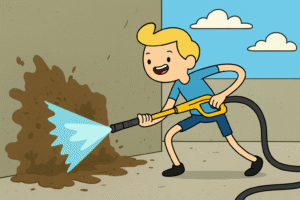
Pressure washing has become the standard method for cleaning outdoor surfaces, but before high-powered water systems were common, people relied on slower and less effective techniques. The rise of pressure washing in the mid-20th century revolutionized how buildings, sidewalks, and equipment are cleaned — saving time, water, and labor.
1. Manual Scrubbing
Before pressure washers, crews used brooms, brushes, and buckets of soapy water to remove dirt and stains. While effective for small areas, manual scrubbing was time-consuming and physically demanding. It also couldn’t remove deep grime, algae, or oil that had soaked into porous materials like concrete and brick.
2. Chemical Cleaning
Many businesses once depended on strong chemical cleaners and acids to break down stains and grease. While these solutions could be powerful, they often created environmental and safety hazards, damaging surrounding vegetation and surfaces. Pressure washing dramatically reduced the need for harsh chemicals by relying instead on mechanical water force.
3. Steam Cleaning
Steam cleaning was an early predecessor to modern power washing. It used heated water vapor to loosen grime, especially on machinery and greasy floors. However, it required bulky, high-maintenance equipment and didn’t produce the same pressure-based cleaning power available today. Modern hot water power washers evolved directly from these early steam systems, offering both heat and high pressure for superior results.
4. Sandblasting and Abrasive Cleaning
For heavy buildup, some contractors used sandblasting or other abrasive techniques. While effective, these methods could damage surfaces and create large amounts of dust and debris. Pressure washing replaced these processes in many situations by delivering a controlled, non-abrasive clean that’s safe for most materials.
5. Simple Hosing and Mopping
For light outdoor cleaning, many people simply relied on garden hoses or mops and buckets. These methods could rinse away loose dirt but did little to remove embedded stains, mold, or oil residues. Pressure washing made it possible to achieve a deep clean quickly and consistently — something a regular hose could never do.
In summary:
Pressure washing replaced older, slower, and more hazardous cleaning techniques like manual scrubbing, chemical washing, and sandblasting. By combining high water pressure, heat, and modern detergents, it delivers faster, safer, and more environmentally friendly results — making it the go-to solution for cleaning everything from sidewalks to warehouses.
If you want to take advantage of the wonderful technology of pressure washing to help maintain your business visit bcs-services.com or contact matt@bcs-services.com