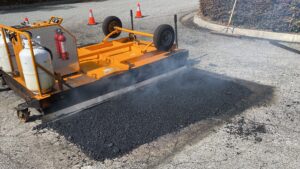
Potholes are a common problem in asphalt surfaces, especially after heavy rain, freezing temperatures, or high traffic wear. Repairing them promptly prevents further damage and extends the life of the pavement. There are several techniques used to fill potholes, each suited for different conditions and budgets.
1. Cold Patch Repair
Best for: Quick, temporary fixes
Cold patching is the most convenient method because it doesn’t require heating or specialized equipment. Crews simply clean out loose debris, pour in pre-mixed cold asphalt, and compact it. This technique is ideal for emergency repairs during winter or wet conditions, though it’s not as durable as a permanent fix.
2. Hot Mix Asphalt (HMA) Repair
Best for: Long-lasting, high-traffic areas
Hot mix asphalt repair involves heating and applying fresh asphalt at temperatures around 300°F. The damaged area is cleaned and cut square, the hot mix is poured in, and the patch is compacted for a seamless bond. This method creates the strongest, most durable repair but requires dry weather and professional equipment.
3. Spray Injection Patching
Best for: Fast, efficient maintenance on multiple potholes
This technique uses specialized spray equipment that cleans the hole with compressed air, applies a tack coat, and then fills it with a mix of aggregate and emulsion under pressure. It’s efficient for large maintenance projects and produces a strong, flexible patch that resists water intrusion.
4. Infrared Asphalt Repair
Best for: Seamless, heat-based repairs
Infrared repair uses infrared heat to soften the existing asphalt around a pothole. Fresh asphalt is then added and blended into the softened area before compacting. The result is a smooth, nearly invisible repair that bonds perfectly with the surrounding surface.
5. Full-Depth Patching
Best for: Severe or recurring potholes
In cases where potholes are deep or the base material is compromised, a full-depth patch is necessary. This involves removing the damaged asphalt and base layers, rebuilding the foundation, and installing new hot mix asphalt. It’s the most durable — and also the most labor-intensive — repair method.
In summary:
Each pothole repair technique serves a specific purpose. Cold patching is quick and temporary, hot mix and full-depth patching offer long-term durability, and modern methods like spray injection and infrared repair balance speed with quality. Choosing the right approach depends on the size, depth, and frequency of the damage — and the desired lifespan of the repair.
For a free asphalt repair quote visit bcs-services.com or contact matt@bcs-services.com