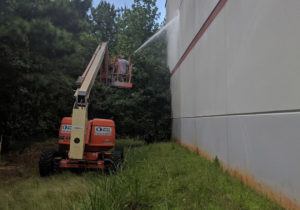
Pressure washing is a versatile cleaning method, but the approach changes significantly depending on whether you’re cleaning flat surfaces like parking lots and sidewalks or vertical structures like buildings.
1. Surface Durability
-
Flat Surfaces: These materials are usually durable and can withstand higher pressure settings. Surface cleaners—large, disk-shaped attachments—are often used for even cleaning without streaks.
-
Buildings: These materials are more delicate. High pressure can strip paint, erode mortar, or damage siding. Soft washing techniques, which use lower pressure combined with detergents, are often the safer option.
2. Cleaning Challenges
-
Flat Surfaces: The main challenge is removing built-up grime, gum, oil stains, and traffic wear. Consistency is important, as streaks or missed spots are more noticeable.
-
Buildings: The challenges are vertical reach and surface variety. Mold, mildew, and dirt tend to cling to shaded walls, soffits, and trim, requiring different nozzles and cleaning solutions.
3. Equipment Used
-
Flat Surfaces: Surface cleaning units paired with high-pressure pumps are common, covering large areas quickly and evenly.
-
Buildings: Extension wands, specialized nozzles, and soft wash systems are often necessary for safe cleaning at heights and on delicate materials.
Bottom Line
Pressure washing isn’t one-size-fits-all. Flat surfaces usually benefit from higher pressure and wider equipment for efficiency, while buildings often require lower pressure and more specialized techniques to avoid damage. Understanding these differences ensures both a thorough cleaning and the protection of valuable surfaces.
For a free pressure washing quote visit bcs-services.com or contact matt@bcs-services.com