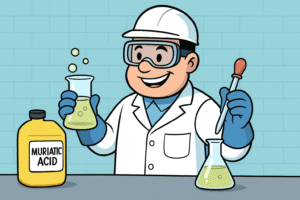
Muriatic acid, a diluted form of hydrochloric acid (HCl), is a powerful cleaning agent sometimes used in pressure washing — particularly for removing tough stains from concrete, brick, and masonry surfaces. While it’s highly effective, it must be handled with extreme care due to its corrosive nature.
What It’s Used For
In pressure washing, muriatic acid is primarily used to:
-
Remove mineral deposits and efflorescence (white, chalky residue) from brick and concrete.
-
Clean rust stains or heavy oxidation on masonry.
-
Etch concrete surfaces to prepare them for sealing, painting, or resurfacing.
Because it dissolves mineral buildup at a chemical level, muriatic acid can achieve results that plain water or detergents cannot.
How It’s Used Safely
Professionals always dilute muriatic acid heavily with water before application — usually at a ratio of 10:1 or greater. It’s applied with a chemical-resistant sprayer, allowed to react for a short time, then thoroughly rinsed off with clean water under controlled pressure.
Proper protective equipment (gloves, goggles, respirators) and surface testing are essential, since undiluted or misused acid can burn skin, corrode metal, or discolor masonry. It should never be mixed with bleach or other cleaners.
Alternatives for Everyday Cleaning
For most general pressure washing jobs, safer and more environmentally friendly detergents are preferred. Muriatic acid is reserved for specialized, professional applications where standard cleaning methods can’t remove heavy deposits or stains.
In summary:
Muriatic acid is a powerful but hazardous cleaner used by professionals to treat severe staining or buildup on masonry surfaces. When used correctly, it restores concrete and brick to like-new condition — but it demands careful dilution, protective gear, and expert handling.
If you have a business exterior that requires tougher cleaning visit bcs-services.com or contact matt@bcs-services.com to schedule a free quote!