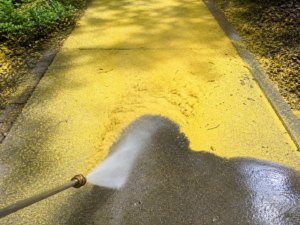
In the southeastern United States, spring doesn’t just bring warmer weather—it brings a thick layer of yellow-green pollen that coats nearly every outdoor surface. Trees like pine, oak, and cedar release large amounts of pollen over a short period, leaving behind a visible film on cars, sidewalks, buildings, and parking lots.
Why Pollen Builds Up So Quickly
The South’s warm climate, combined with high humidity, creates ideal conditions for heavy pollen production. Wind carries pollen across large areas, allowing it to settle into every crack and crevice. Because many surfaces like concrete and brick are porous, pollen doesn’t just sit on top—it can embed itself into the material.
More Than Just an Eyesore
While pollen is often seen as a seasonal nuisance, it can cause several issues if left untreated:
-
Staining and discoloration on concrete, siding, and painted surfaces
-
Slippery conditions when mixed with moisture
-
Organic buildup that can contribute to mold or mildew growth
-
Reduced curb appeal for commercial properties during peak business seasons
Why Pressure Washing Is the Best Solution
Standard rinsing or rainfall typically isn’t enough to remove pollen buildup. Pressure washing uses high-powered water (and sometimes detergents) to lift pollen out of porous surfaces and fully remove the residue. This restores the appearance of the property and helps prevent longer-term damage.
Timing Is Key
In the South, the heaviest pollen season typically occurs in early to mid-spring. Many property managers schedule pressure washing immediately after peak pollen drop to remove buildup before it settles in or leads to staining.
Bottom Line
Pollen is a seasonal reality in the South, but it doesn’t have to leave a lasting impact. Routine pressure washing helps keep properties clean, safe, and professional-looking during one of the messiest times of the year.
If you’re ready to get the gunk off your property contact matt@bcs-services.com or visit bcs-services.com!